Guest Service at the Desk or on the Floor
Guest service at the desk or on the floor calls for different kinds of attention. Learn how fixed-point and roaming roles shape movement and communication.

The common mistake in guest service at the desk or on the floor is treating both roles as the same job in different locations. That can leave a desk attendant watching the queue while missing a guest who needs a quiet explanation, or send a roaming attendant across the room without noticing someone waiting nearby. The difference is not simply whether you stand still; it is how you direct your attention, choose when to move and make help easy to find.
Two service positions
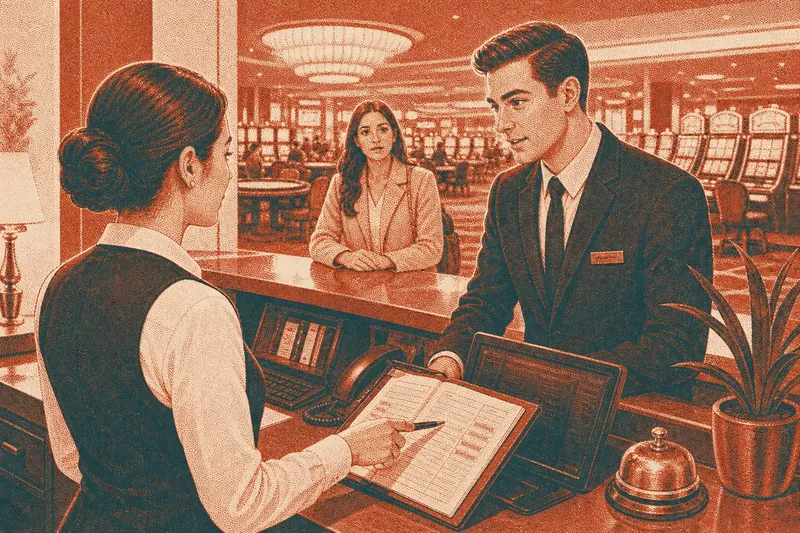
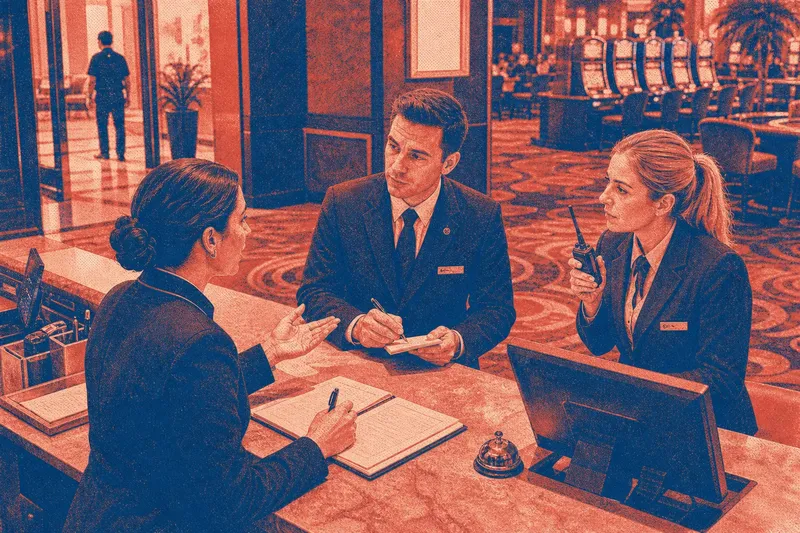
A fixed-point role centres on a known place: a reception desk, information counter or designated guest-services station. Guests can approach it, and colleagues can direct them there. The position gives the worker a stable point of contact, but the desk does not make service passive. The attendant still has to follow the queue, manage interruptions and notice when a guest seems unsure about approaching.
A roaming role centres on the guest area rather than a counter. The attendant may circulate through a lobby, gaming floor or nearby waiting area, offering help where it is useful. Movement can make a raised hand or a puzzled look easier to spot, but it also means the worker is less predictably located. Guests may need a clear signal that help is available.
Neither arrangement is automatically better. A venue may use one, the other or a blend, depending on its layout and service needs. The useful question is what kind of attention the role asks for at a particular moment.
Attention at a fixed point
At a desk, attention has an anchor. The attendant can keep the counter welcoming, follow the queue and handle enquiries in a visible sequence. A guest who has waited can see that their turn is approaching; someone arriving with a specific question can identify where to go.
The trade-off is that one conversation can occupy the whole service point. A guest may need a detailed explanation while another is waiting with a simple request. The attendant has to acknowledge the next person without making the current guest feel hurried. A brief glance, a courteous greeting or a clear indication that help is coming can prevent silence from seeming like neglect.
Desk work also depends on keeping the interaction clear amid nearby activity. Background noise, people moving through the lobby and questions from colleagues can make it easy to miss a detail. Give each guest enough attention to understand the request, then use the venue’s approved information and referral routes rather than guessing.
Attention while roaming
On the floor, attention is distributed. The worker scans the area while staying available for a conversation, looking for cues such as a guest searching for signage, trying to catch an attendant’s eye or pausing at a decision point. These cues are invitations to offer help, not proof that the person wants it. A brief, low-pressure opening gives the guest room to accept or decline.
Movement can make service feel timely because help reaches people who might not know where to go. It can also create competing demands. An attendant who has started helping one guest may notice another waiting nearby, while a colleague may request assistance elsewhere. Keep track of the conversation already under way and avoid appearing to abandon it.
Roaming does not mean walking continuously. Pausing at a useful location can make an attendant easier to approach and give them a moment to observe. The position should also respect the venue’s working boundaries: service staff must not obstruct access, interrupt other staff duties or enter areas outside their role.
Movement and visibility
Movement is the most obvious contrast, but the real distinction is what movement communicates. A desk attendant’s stable position tells guests where service begins. A roaming attendant’s route tells them that assistance may come to them. Either message can fail if it is not supported by posture and clear communication.
At a fixed point, a screen, paperwork or conversation with a colleague can make the attendant appear unavailable. On the floor, brisk movement or attention fixed on a device can make the worker seem difficult to approach. Small adjustments help: face towards the guest area when possible, pause before starting a conversation and avoid creating a physical barrier between the guest and the service point.
Say you are assigned to a lobby information desk during a busy arrival period. A guest asks about a venue amenity while another person approaches looking uncertain. You acknowledge the new arrival with a short greeting, finish listening to the first question, then tell the next guest when you can help. The expected result is clear: both guests know they have been noticed, even though neither receives an immediate answer.
Now imagine the same two guests are in an open guest area and you are roaming. You approach the person who appears to be looking for assistance, offer help without assuming what they need, and keep the other guest in view while you listen. If the first enquiry needs a colleague or a fixed service point, explain the next contact clearly rather than walking away without warning. In each setting, the goal is not to serve two people at once; it is to make the order of attention understandable.
Communication that fits
At a desk, communication often begins with the guest’s question. Ask a concise clarifying question, give the relevant information and check that the guest knows what to do next. A counter can encourage a transactional style, so a warm tone and an unhurried first response matter.
On the floor, the attendant often initiates contact. An open question such as “Can I help you find something?” gives the guest room to explain. If they decline, a relaxed acknowledgement keeps the interaction comfortable. If they accept, listen before offering directions; a person who appears lost may be looking for a particular amenity, a colleague or an accessible route.
In either role, plain language is more useful than venue jargon. Directions should name a recognisable place or landmark, and a guest should know whether they need to follow signs, speak to another team member or return to a service point. If the answer is uncertain, say so plainly and use the venue’s normal route for finding reliable information.
Some requests need discretion. A guest may ask about a sensitive matter in a public area, or a conversation may involve information that should not be discussed where others can hear. A desk attendant can offer a more private place if venue practice allows; a roaming attendant can guide the guest towards an appropriate service point. Do not promise confidentiality beyond the venue’s policy or your role.
Matching the role to the moment
Fixed-point and roaming service are not competing styles. They solve different access problems. A counter suits guests who know they need help and want a clear destination. Roaming service suits moments when guests may benefit from being approached, especially in a large or unfamiliar area. Some venues combine them so a known service point remains available while staff also support the surrounding space.
Use these observations to decide whether the position fits the guest’s immediate need:
- Guest expectation: If guests are looking for a known place to ask, keep the counter visible; if they seem unsure where to go, offer floor support or direct them to a clear service point.
- Queue and floor activity: If a queue is forming, make turn-taking clear at the desk; if activity is spread across the area, stay where guests can approach without obstructing movement.
- Enquiry length: If the question needs a longer explanation, use a suitable fixed point when available; if it is a brief directional request, answer where the guest is, provided it is practical.
- Next action: If you can answer within your role, explain the next step; if the guest needs another team or an escort outside your duties, name the right contact and follow venue procedure.
- Privacy: If other guests can hear a sensitive request, offer an appropriate private service point if policy allows; if no suitable place is available, explain the approved referral route instead.
- Assigned duties: If your role permits movement from the station, provide floor support when it helps access; if you must remain at the station, ask a colleague or supervisor to assist rather than leaving it unattended.
These observations are not a scoring system. They help staff and supervisors notice whether the position fits the guest’s immediate need, and whether the worker has a clear way to continue or refer the conversation.
Questions about service roles?
Is desk service more personal?
Not by itself. A stable counter can make help easy to locate, but the quality of the exchange depends on attentive listening and a response that fits the person’s question.
Does roaming mean approaching everyone?
No. Offer help in a way that leaves room for the guest to decline, and avoid interrupting a private conversation or another staff member’s service.
Which role suits a longer enquiry?
A fixed point may offer a calmer place to explain details, but the right option depends on privacy, venue practice and the request. A roaming attendant can direct the guest to a suitable contact if the conversation needs more time or a different team.
Can one attendant switch between both?
Some roles combine a home base with short periods of floor support; others require staff to remain at a particular station. Follow the assigned duties and use the venue’s guidance for deciding when and how to move.
Judging the service
Good service is not measured by how much ground an attendant covers or how many questions pass across a counter. Look instead at whether guests can identify where to ask, whether someone acknowledges them when they arrive and whether the next action is clear. A quiet guest who leaves without speaking may have found what they needed—or may have decided that help was too hard to reach. The worker cannot read minds, but can make the invitation to ask visible.
That is the practical distinction in guest service at the desk or on the floor: one role makes help findable through a fixed place, while the other brings help into the guest area. Both ask for attentive observation, respectful timing and clear language. The strongest approach is the one that suits the venue’s arrangement and leaves each guest knowing how to get the next answer.